Collect
Bring together rack schedules, labels, diagrams, asset lists and supplied handover information.
DIGITAL TRANSFORMATION FOR PHYSICAL INFRASTRUCTURE
CABVIX helps councils, public-sector teams, service providers and multi-site organisations replace fragmented paper, spreadsheets and static diagrams with a maintained record of physical network infrastructure.
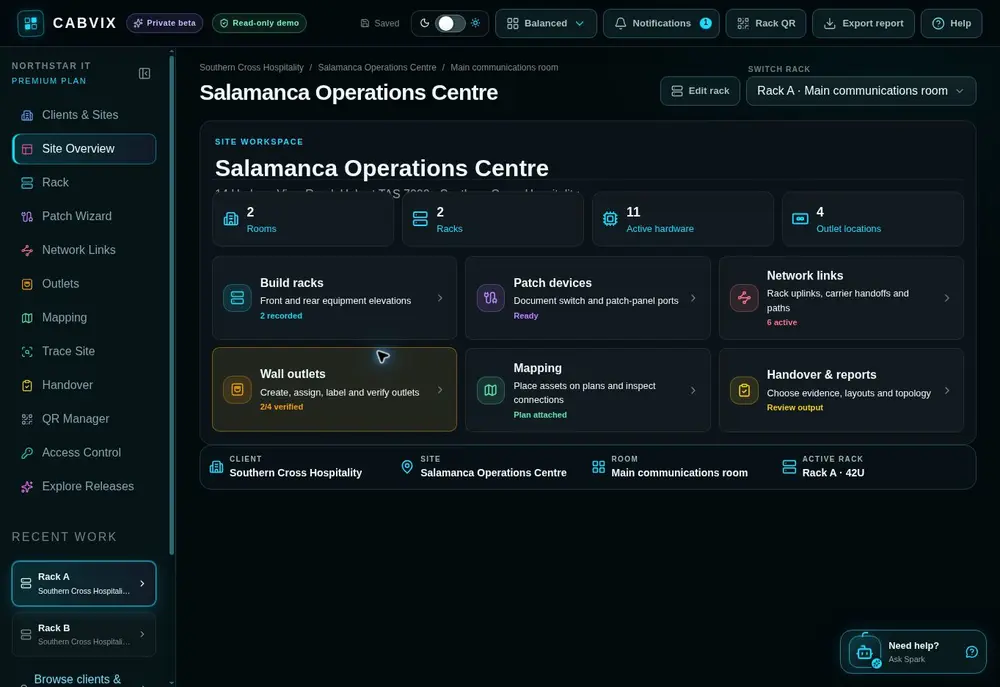
Yes. CABVIX supports digital transformation where organisations are moving physical-network records out of folders, paper schedules and isolated files. The important change is not simply scanning documents—it is creating structured information that remains searchable, permission-aware and updateable after the project ends.
FROM ARCHIVE TO OPERATIONAL RECORD
A photographed page or static PDF may preserve the old record, but it does not automatically make that information easier to maintain. CABVIX turns physical infrastructure into connected records that teams can inspect, update, trace and report.
Bring together rack schedules, labels, diagrams, asset lists and supplied handover information.
Organise the client, site, room, rack, device, outlet and physical connection hierarchy.
Separate confirmed field evidence from missing, inherited or uncertain information.
Link assets, power, patching, plans, topology, tests and QR access to the same maintained context.
Update moves, changes, faults, support requests and handover records through normal work.
WHERE CABVIX ASSISTS
Use one method across offices, depots, libraries, facilities and other managed sites while retaining local room, rack and asset detail.
Keep workspace access, temporary approvals, QR entry and asset-support requests separate from public-facing information.
Keep physical-network knowledge in a shared operational record rather than with one technician, one binder or one spreadsheet owner.
Let authorised teams record changes beside the rack, asset or outlet instead of creating another note to reconcile later.
Create branded rack, site, asset and handover PDFs from current records when a printable or distributable document is needed.
Start with priority sites and known records, mark gaps honestly, then improve the dataset as authorised work provides evidence.
PRACTICAL ENVIRONMENTAL POTENTIAL
A digital-first record can reduce the need to print working copies, duplicate handover packs and repeatedly travel to a site only to rediscover information that could have been available remotely.
The environmental result is not automatic. It depends on what the organisation replaces, how often teams use the record instead of printing or travelling, data-hosting impacts and whether information stays current.
CABVIX does not claim to be carbon neutral, paperless or environmentally positive without measured evidence.
COMMON QUESTIONS
It preserves the document, but a scan remains static. CABVIX is designed to turn the underlying physical-network information into records that can be searched, connected, updated and reported.
Yes, for the physical infrastructure record within the broader programme. It can provide a consistent structure across departments and sites, while the organisation remains responsible for procurement, policy, records-management, security and integration requirements.
It can support digital access and on-demand reporting, which may reduce routine printing. Some labels, statutory documents, signed records or offline copies may still be required.
A current remote record may prevent some information-only discovery visits and help teams prepare before attending site. Physical installation, verification and authorised field work still require people on site.
No. A credible carbon claim would require a defined baseline, measured usage and evidence for the specific organisation and period.
Track printed pages, report distribution, discovery visits, repeat inspections, time spent locating records and the percentage of sites with current verified information before and after adoption.
START WITH THE PHYSICAL RECORD